I’d Like to be Monk Someday

I sometimes wonder if monks have off-days.

You know, something like, darn, I was meditating really well until, I thought of something. Or, just when I was about to close this spiritual connection, it all went pear-shaped. The Chief Priest really screwed my day by denying my philosophical treatise on what this world is about – I had it completely nailed – laid it out so beautifully in my PowerPoint Presentation (Not exactly, but you know what I mean)

They probably don’t have to worry about salaries and relationships and such (I think), but I have a feeling they must be having off days.

Because here we are desiring so many things and not getting most of them, they try really hard renouncing things and it must be tough denying what you get, right? And I have desired renunciation often, but I have now renounced that desire, because I am not sure it will help. 

Frying pan to the fire. Or something like that, or vice versa.

But I’d like to be monk someday.

But somewhere, deep down we all give up, don’t we? Perhaps because of circumstances, or something else. We just become massive-hearted and accept all that is going on. We allow the world to be. Some things are worth fighting for.

Some fights however, are won only because you do not fight back.

Flavours of Funny

Funny has two flavours.

One that makes and one that tastes.

We can be both, but we are not necessarily both.

One cooks, one eats.

One can eat what one can cook. Not always, though. It’s always better when someone else eats what we cook.

A friend refused to come to my place ever, because he discovered that I cook. I am now referring to ‘real’ cooking. Like food. He is afraid of dying of food poisoning.

That is funny.

I tried to be funny once. I wrote a post.

Tried.

You are funny or you are not.

Perhaps you cannot always be funny.

Or, once you were funny, now you are not. Maybe you will be funny later.

What you cook remains the same but their tastes change.

Maybe you will cook differently in some time.

Maybe it will appeal to the new tastes.

Maybe not.

What’s important, is the food.

Not whether you cook it or eat it. 

One who eats is as important as the one who cooks.

The kitchen needs the dining room. And vice versa. 


Up in the Air

There’s too much of more. There’s a new fanatic in town, and her exposed argot has more words that end with -er.

Faster, smaller, thinner, longer. Sharper. And the sorts.

In Victor Hugo’s apt words, however, argot is the language of the dark; a language of misery.

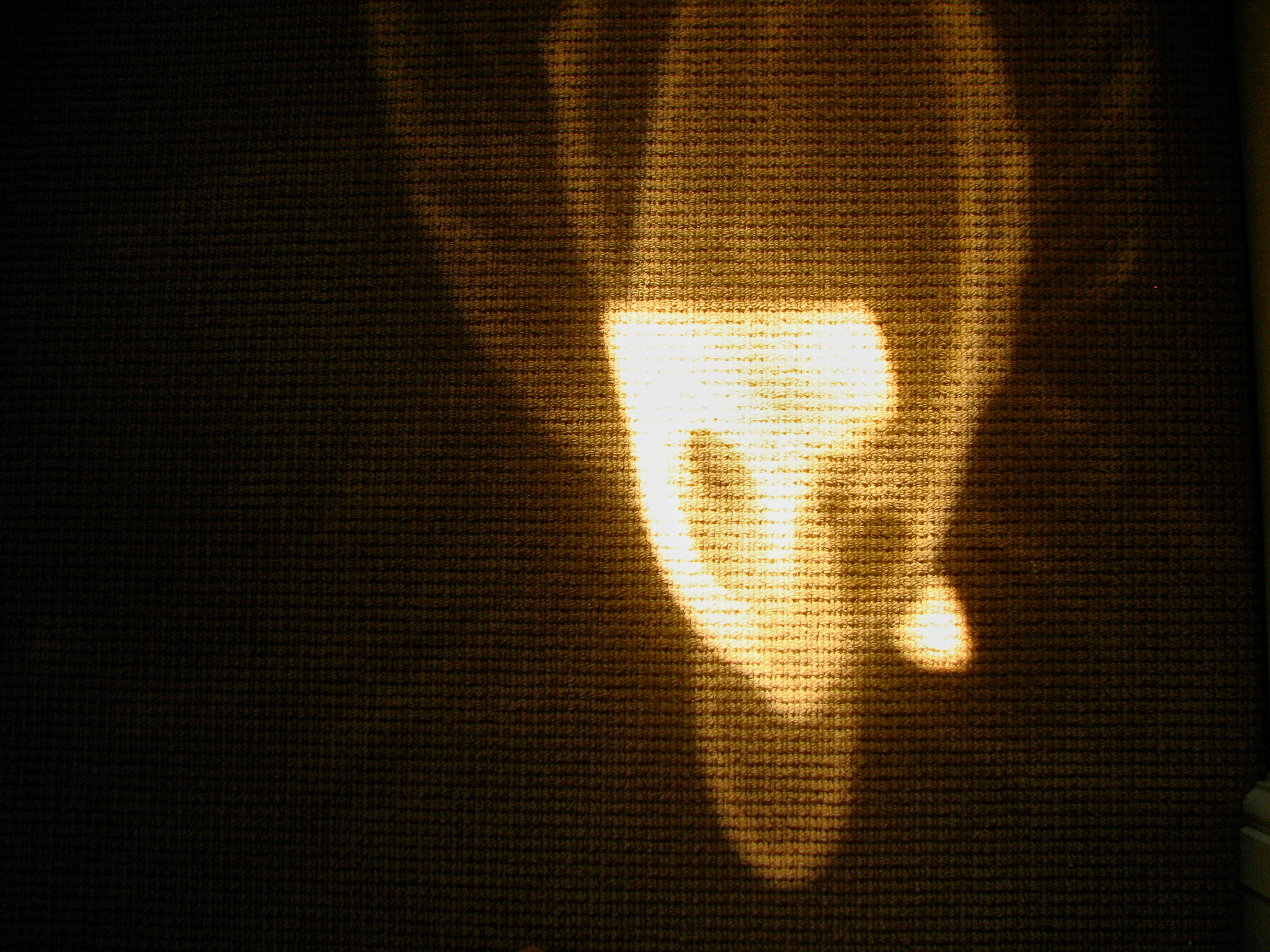
Here’s a blurred photo.

1787

It’s blurred. You cannot see much detail. There is hardly any specificity in the image. What does this mean for the image? Not for the photographer (that’s me, and I do not care much about what you think of me). Does it become a bad image because, alas, we cannot see the twist and the weave of the fibre that makes the thread that have revolted out of the binding Rexine?

A friend would take up this argument and talk of test cricket and the T20 format.

I’ll digress. If you don’t want to, skip the marked section.

<Start Digress>

I quit Flickr Pro and moved to 500px because it was a suggestion by a well known photographer. I hated it as soon as I saw the “top” photos. They just do not seem real to me. 500px is a muscle show of post-processing. Not that post-processing is bad. I use it all the time. I was looking for a word when I was discussing 500px with a friend. I didn’t find it then, I have it now.

Synthetic.

Over the years, the 500px platform went through a number of revisions and changes, growing together with technology and photographers, and keeping focus on the highest quality photos. Via 500px  (emphasis, mine)

500px offered a way to sell photographs, but I was not (and am not) interested in it, anyway. I’ve (mostly) quit 500px.

</End Digress> 

There is no doubt that our tastes are changing, our attention spans diminishing. We have lesser time for our friends and no time for ourselves. Enough research floating around to prove that. 2831215 is the phone number of the travel agent of my first company. This was when mobile phones didn’t exist. Now, I don’t even remember my fourth travel agent’s name. Hell, I don’t even remember if I use a travel agent anymore. I have to remind myself to add keywords to her address card. My choice of keywords defines what I will forget about her and what I might use to search for her. It’s exhausting, in a way. Her’e a worthwhile exercise – how many mobile numbers (of close friends or family) do you know by-heart?

I need to travel a bit. But I digress. (I should have warned you)

Adobe recently announced that the Creative Suite will now be cloud-based. To make the news worthwhile they included some super sharpening tools to the CS. (Now you know what triggered this post)

Apart from the irritating plugin that I *have* to use with browsers, I do not use any Adobe products because of their bloated sizes and prices. But this post is not about Adobe, at all. Software is a tool; it makes sense in a way that you use it. I find arguments about tools pointless. As long as you do your work well, the tool doesn’t matter. Hammer vs. Pestle. Mac vs. Win or Can vs. Nik. Same difference. 

This post is about simple questions.

How much sharper do we need our images to be? How slimmer should our phones be? How faster should our computers be? How much thinner should our laptops become?

And while the inanimates around us become more ‘-er’ and ‘-er’, what about us?

What ‘-er’ should we be striving for?

Successful Partial Detox

As against a Partial(ly) Successful Detox.

It’s been a month that I have ‘stayed away’ from Facebook, and have been successful at that. It’s a good feeling. As a mark of being away, I changed my cover photo and profile picture to reflect that, I guess it didn’t make much sense. Only one friend asked me about my absence and I pointed her to my Facebook cover and profile photo. That was my cryptic way of saying, “I am away.”

And, apparently, too cryptic.

Screen Shot 2013 04 30 at 1 16 03 PM

My being away from Facebook was not a full detox (that should explain the “partial.”) Because I administer a photography MOOC on Facebook and my company’s page, I couldn’t be completely away. So it was only a detox of status updates and commenting etc, on my profile page, unless addressed directly. The need to share shifted a bit on Twitter for the month, but it wasn’t significant.

All of this meant that I wrote more on my blog (than before, not in absolute terms), had a chance to read quite a lot, support my Premier League team, de-clutter the space around and spend some time with myself, become better at cooking, learning the fundamentals, and start something new (at work). It also helped think about, to an extent, how to make optimal, non-intrusive use of social media. Of all the things, however, it lets you know the value of your presence in social media networks.

Walking away, in a funny way, is knowing where you really stand.

Looking through a Microscope

So Mahendra had this to say, in his recent post:

“Each of these human beings is a tele­scope, if only one were will­ing to watch through the eye­piece. The eye­piece, in this case, is the human abil­ity to lis­ten, which we most often abuse — or in other words, don’t use at all.”

(Via Telescopes | An Unquiet Mind.) I urge you to read this beautiful post, wonderfully written.

Curiosity makes us want to see beyond what the naked eye perceives. So we invented telescopes and microscopes. And now we have X-ray vision, thermal imaging and night vision and of course many other ways to look. So we have been able to do a lot with increasing the depth, breadth of seeing, overcome seeing through obstacles, yet we seem to have done little to increase perception or insight.

IMG 3544  Version 2

In the context of Mahendra’s post, we seem to be using the microscope more than we have need to use the telescope. In a way, I feel that we look so often through the microscope that we fail to use the telescope for a change. And what we see through the microscope gives us (not so valid) reasons not to use the telescope. Because when we look through a microscope we see limited data, often devoid of context.

We’ve looked enough and even know more than we need to – perhaps it is time to see.

PS: In a different context, a series on Ways of Seeing

The Secret’s up in Smoke

I know something.

It’s a secret. So, obviously, I cannot tell you what I know. But it does bring me to the thought about how we deal about secrets, and, perhaps (and therefore) what makes us vulnerable.

I know folks who will take secrets to their grave; I know a few others who will blurt out what they know at first possible context that they can think of. One (of the many) classifications, in which we think about people, is how they manage secrets. I use the word ‘manage’ with some purpose. I could have easily said, ‘keep’ secrets.

I am not the person you want to confide, if you do not want anyone to know what you are up to. Especially, if what you confide in me is happy news. I am, perhaps, melancholic in a way. If I know something about you that is not worth sharing, I’ll take it to my grave. But we do have to deal with the aspect of “what is worth sharing” – is it how you see it or is it how I see it. There is a difference you know.

*-*

Flashback, circ. 1989.

A young healthy body is shivering. Guts are in short supply. I gather them as much as I can. I proceed. I gingerly walk up and inform my father that I smoke. The response is factually receptive (if that phrase means anything). He accepts my confession (my perspective) as a statement (his perspective).

“Good, you told me.”

“Well, I didn’t want you to hear it from someone else.”

“Anything else?”

I hover around and he has sensed that my bigger problem was not the confession (my perspective) but, something else.

“Please don’t tell Mom.”

“I won’t, for the sake of it, but if it come down to a conversation, I will tell her.”

I don’t know if you have ever experienced a feeling that the world is made of paper and it starts crumpling around you, but it was a similar experience. He didn’t say, “I have to tell her,” he said, ” I will tell her.”

I left the room; he did not look up from the paper that he was reading.

*-*

Of the things that people confide in us – there are things that are good, and there are things that are not so good. I am given to hold, protect and preserve secrets that don’t show folks in good light. I will, also hold, protect and preserve secrets that have not yet become the well-known truth. However, I have to find someone to share good news. If you want to suppress good news about you – I am not the person you should be speaking with. Never trust me with “good” secrets. I am, usually, unable to hold tight, the secrets that show the wonder of great people. Overall, that makes me a person who cannot keep secrets half the time.

There’s one more thing about how I deal with secrets. If it looks like someone is about to confide, I ask them to wait a moment. I tell them that by the fact that you (may) confide in me, my wife will know it. By choice or chance, but she will know it. Unless you agree to that, do not confide; I am better off not knowing. It’s my rule; it’s not my wife’s rule, so, perhaps you are better off confiding to her.

But it does all come back to the nature of secrets and their purpose. To tell someone something that they aren’t supposed to know in the first place, is the first violation of a “secret.” However, to tell something to someone, means that you want to be heard. Which, to my mind, violates the essence of a “secret.” Yet, secrets are exclusive bonds between people. Some secrets bind people for life. Even if none of them ever want to or need to “out” a secret. Whatever the relationship, secret-management defines a relationship. Venn diagrams, Sub-sets and Super-sets, is the one concept that I am very glad to have learned in school.  Are we vulnerable because we know something or because we do not know something? Do we seek secrets? Do we avoid them?

And, therefore, if more than one person knows that one thing, it is already not a secret, no?

PS: Here’s a secret for you; my Mom knew I smoked, long before I knew that she knew, that I smoked. That other secret, I am trying to hold back and ‘manage’ it for as long as I can. It’s a good secret. If I do hold back till the right time, perhaps I will be better at secret management.